
Coastal erosion · mangrove loss
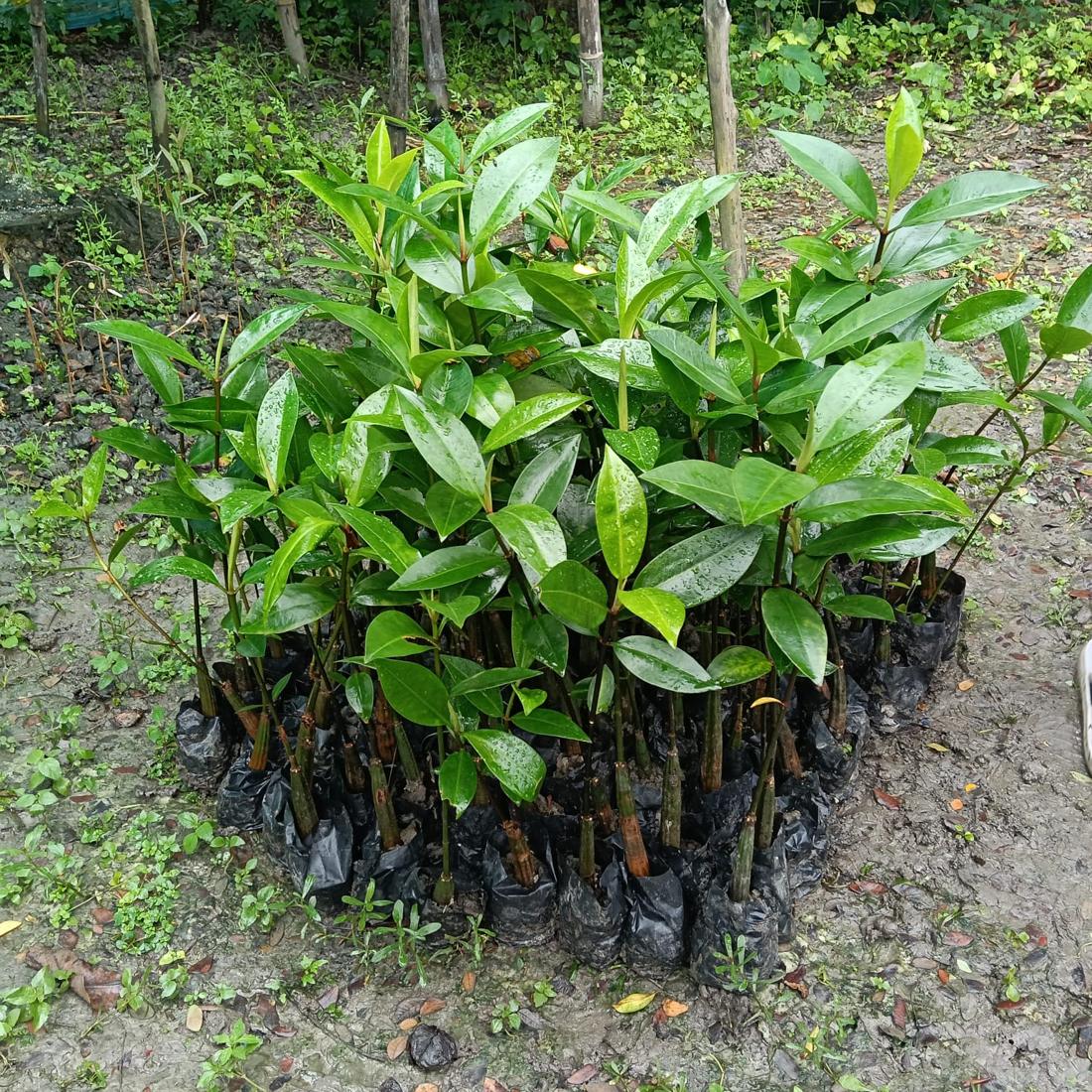
The Mangrove Nursery
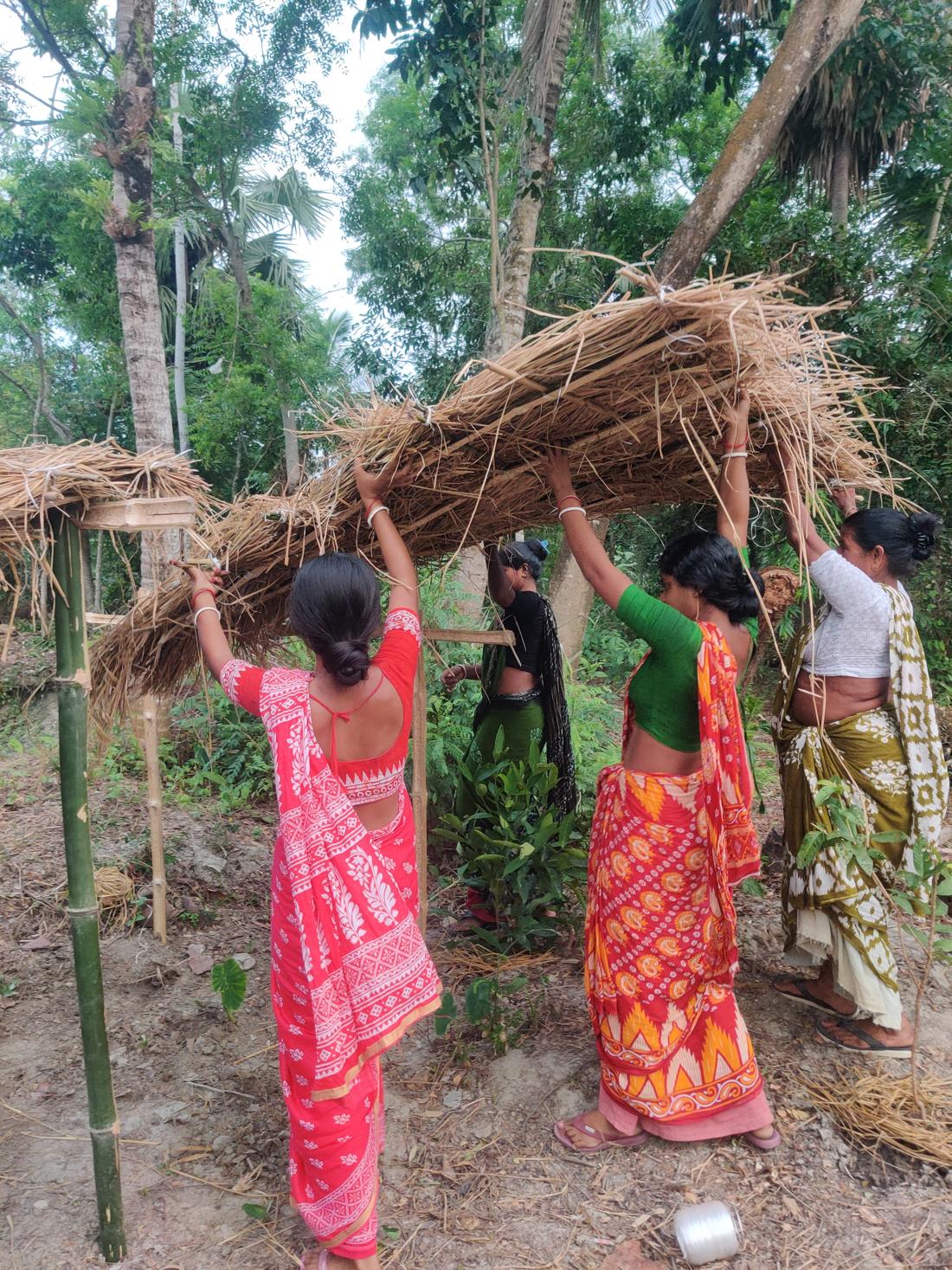
Summer heat made planting on the mudflats impossible, and the political changes ruled out public land by the river. So the group raised mangroves first, in a nursery on land offered by Anjali. They visited a local mangrove nursery to learn the craft, then began with three species that can be grown inland.
- The disagreement
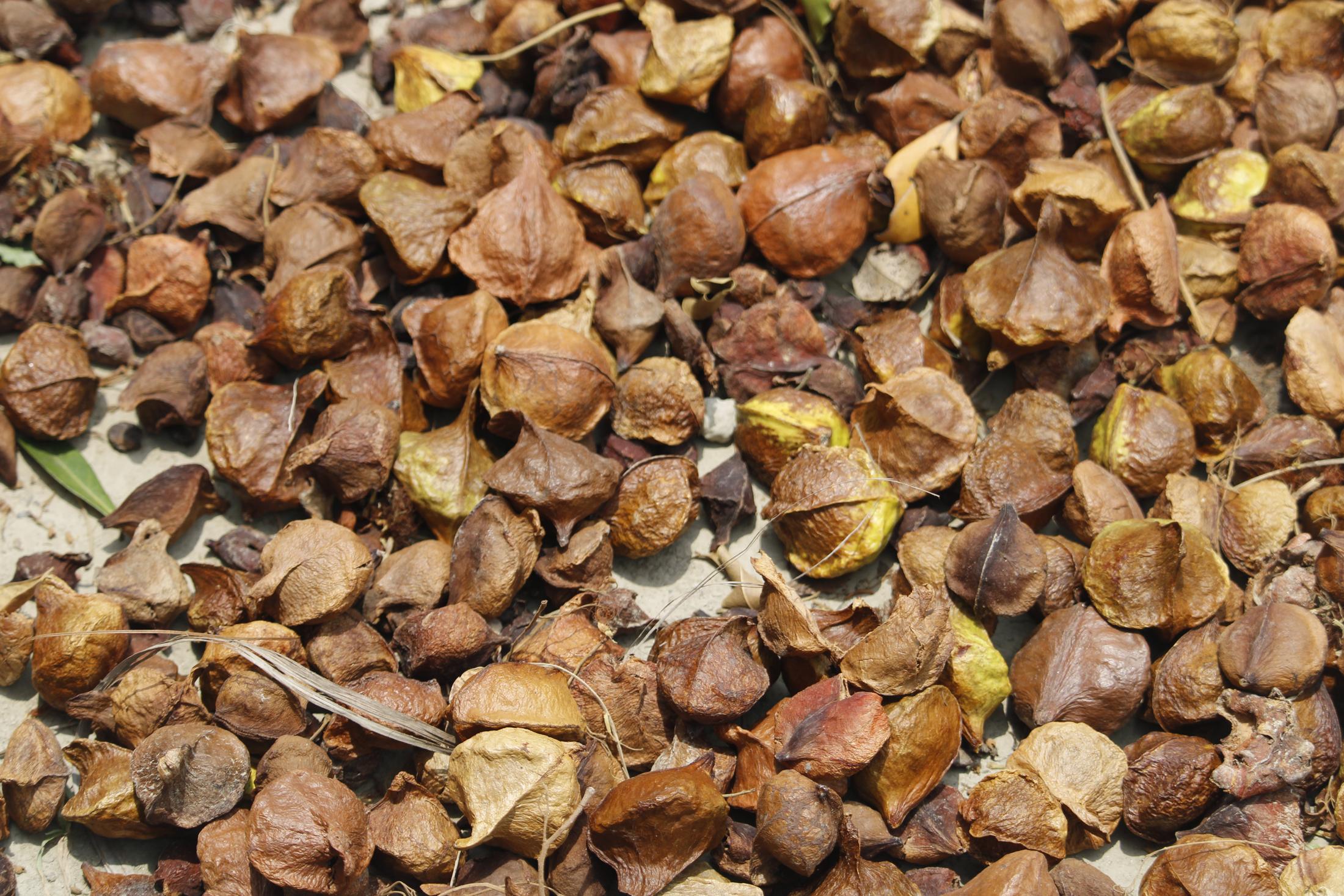
- A trained nursery manager advised keeping seedlings in salt water from the start. Drawing on generations of growing mangroves in their backyards, the women tested fresh water instead: seeds tied in fishing nets and floated in a pond for 15–20 days, against direct potting. Fresh water gave faster, stronger results for the Sundari.
- What it showed
- Mangroves are facultative halophytes: they tolerate salt but don't depend on it. Salt keeps faster-growing plants away. It isn't food. So inland households with no tidal access can raise native mangrove stock, which widens who can take part in restoration.
- Results
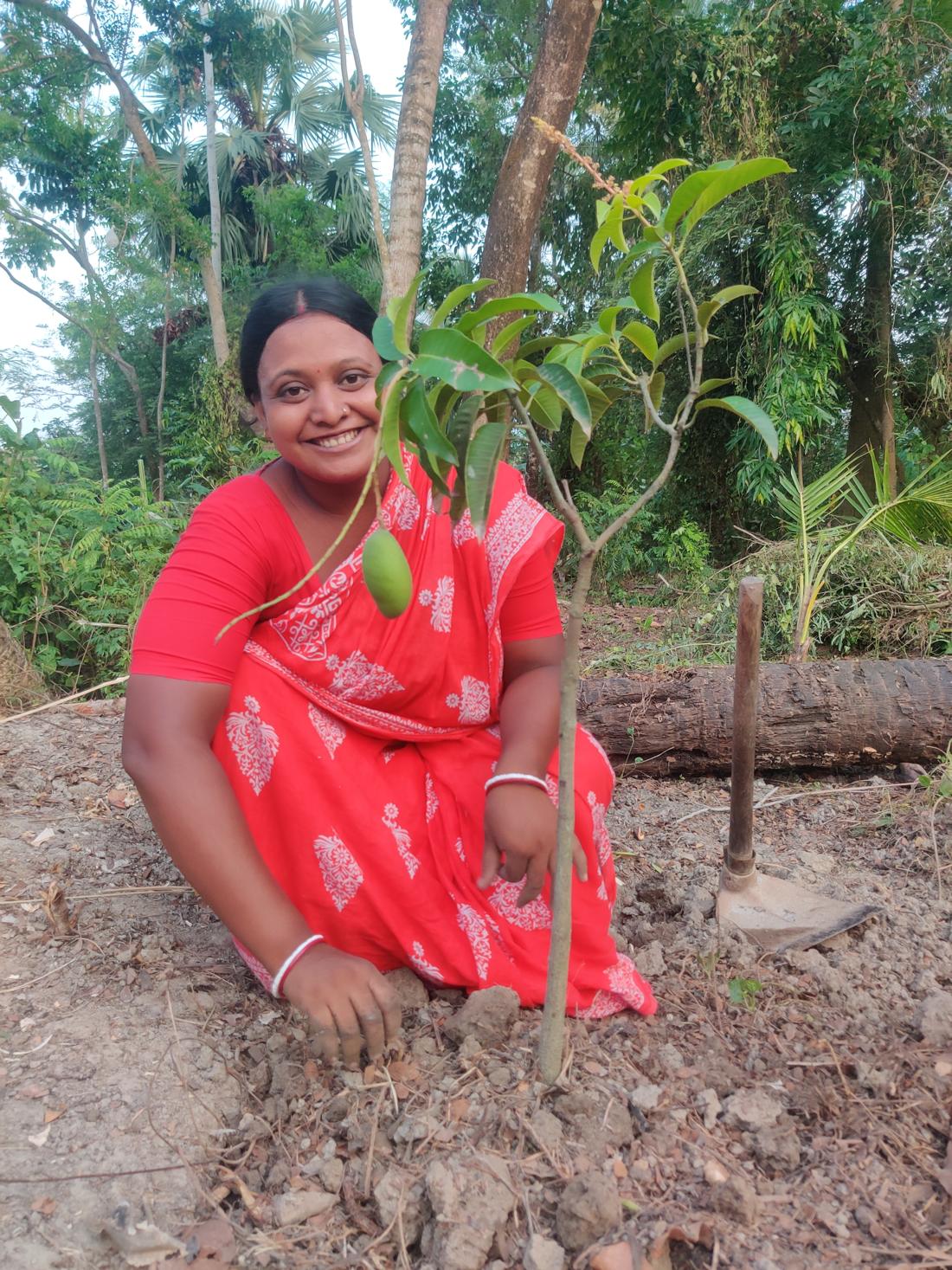
- 213 of the first 230 seedlings survived (93%). After the pilot, the women collected more propagules from the riverbanks, and the nursery grew to 8 native species. About 500 saplings have since been planted out with the Sundarbans Forest Department and are being monitored. A new nursery focused on the endangered Sundari has begun.
- Sundari Heritiera fomes
- Kankra Bruguiera gymnorhiza
- Jat bain Avicennia officinalis
- Peyara bain Avicennia marina
- Dhundul Xylocarpus granatum
- Passur Xylocarpus mekongensis
- Jhati goran Ceriops decandra
- Math goran Ceriops tagal
- Garjan Rhizophora sp.